Location Data Streams and Layered Bonus Eligibility in Multi-Regional Platforms
Written by Gisela Hughes · Jul 24, 2026
Location Data Streams and Layered Bonus Eligibility in Multi-Regional Platforms
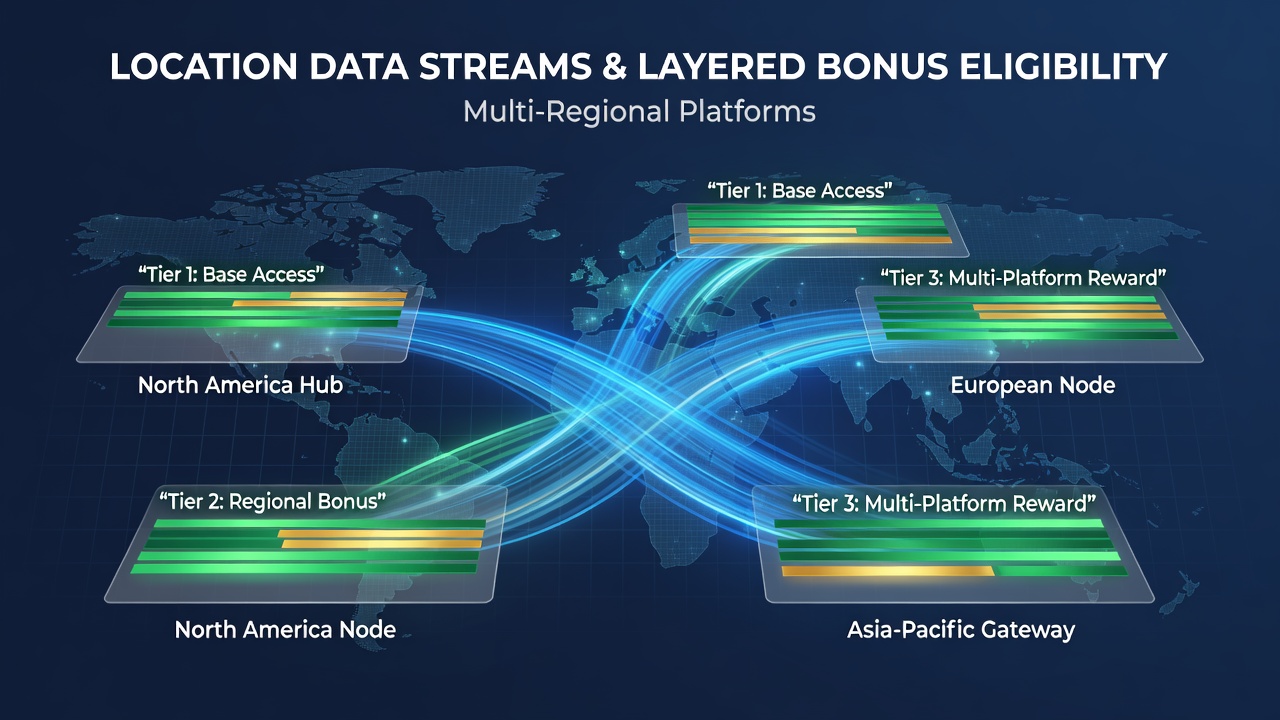
Multi-regional platforms rely on continuous location data streams to determine which users qualify for specific bonus layers, and these streams combine GPS coordinates, IP addresses, and network signals to create eligibility profiles that adjust in real time. Operators segment bonuses according to regional rules, player residency, and promotional tiers, so a user moving between zones might see their available offers change without manual intervention. Data from July 2026 shows increased adoption of these systems as platforms expand across borders while complying with local requirements.
How Location Data Streams Operate
Platforms collect location information through multiple channels that feed into centralized processing hubs, and these channels include device GPS, Wi-Fi triangulation, and cellular tower data that update every few seconds during active sessions. Engineers design the streams to handle high volumes of concurrent connections, which means servers must filter noise from accurate signals before passing the cleaned data to eligibility engines. Research from the European Gaming and Betting Association indicates that accurate stream integration reduces eligibility errors by up to 40 percent compared with older static IP checks.
Once the raw data enters the system, algorithms cross-reference it against regulatory maps that define eligible zones, and any mismatch triggers an immediate recalculation of available bonus layers. Those who've studied these architectures note that fallback protocols activate when primary signals drop, switching to secondary sources like IP geolocation databases maintained by commercial providers. This redundancy keeps the process running smoothly even during network congestion or device handoffs between carriers.
Layered Bonus Structures and Regional Variations
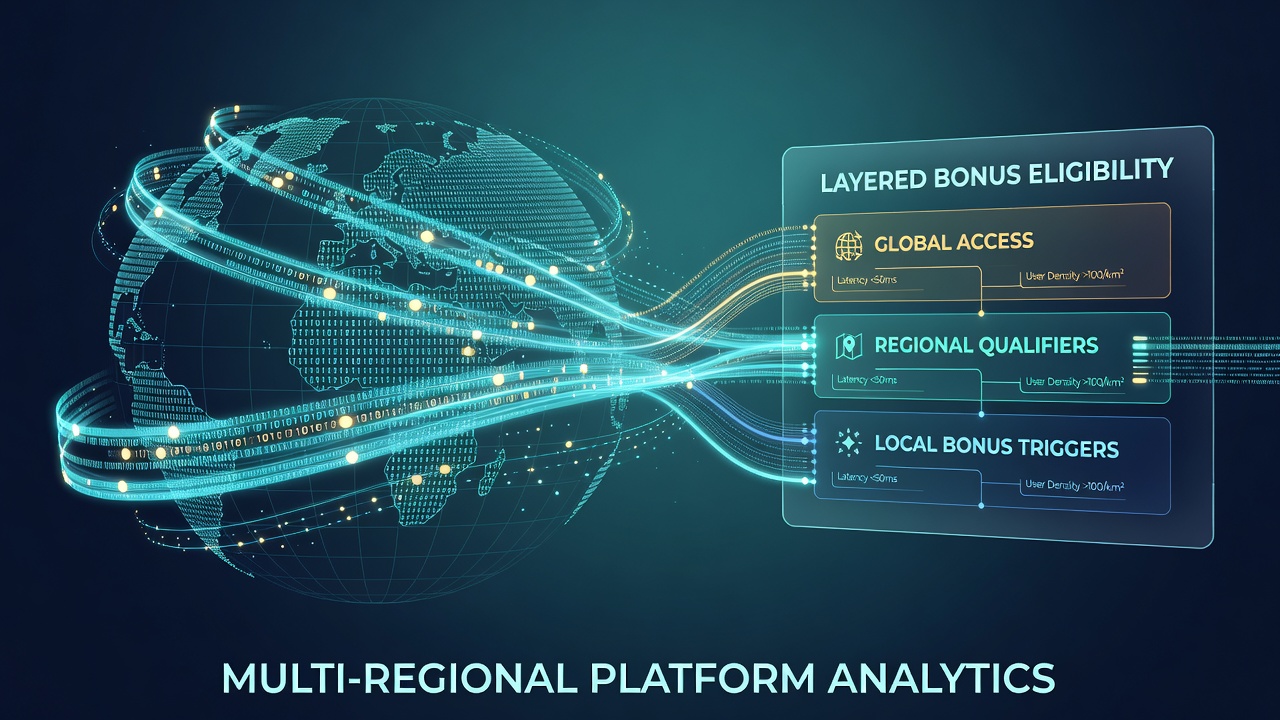
Bonus layers typically stack according to a hierarchy that starts with base offers available in all regions and adds regional multipliers or exclusive rewards tied to specific jurisdictions. A platform might grant a standard deposit match everywhere yet unlock higher percentages or additional free spins only when the stream confirms the user sits inside a high-value market. Figures from industry reports reveal that platforms using dynamic layering see participation rates rise by 15 to 25 percent in targeted zones because offers match local spending patterns more closely.
Eligibility checks run at multiple points, including account creation, deposit events, and session starts, while background monitoring continues to catch changes that could affect ongoing promotions. When a user crosses a boundary, the system recalculates remaining bonus value and converts it to the new layer if the rules permit, or it freezes the offer until the user returns to an authorized area. Observers note that this approach prevents unintended payouts while preserving user trust through transparent notifications sent via in-app messages.
Regulatory Influences on Data Handling
Government agencies across different continents set the boundaries that platforms must respect when processing location streams, and these rules often require explicit consent plus data minimization practices. In Canada, provincial regulators emphasize that operators retain location records only as long as necessary for compliance audits, which forces platforms to implement automated deletion schedules. Similar requirements appear in Australian state frameworks that tie bonus eligibility directly to verified residential addresses rather than transient signals.
Platforms respond by building consent dashboards that let users review and revoke location permissions, and these dashboards connect directly to the eligibility engines so any withdrawal of consent immediately removes the user from layered offers. Data shared by academic researchers at institutions studying digital compliance shows that platforms with clear consent flows experience fewer regulatory inquiries than those relying on blanket terms. The result is a system where bonus access depends on both technical accuracy and documented user agreement.
Technical Challenges in Stream Integration
Latency remains a persistent issue because location updates must reach decision engines before bonus claims process, and delays of even a few seconds can create disputes over which layer applied at the moment of activation. Engineers counter this by deploying edge computing nodes that perform preliminary checks closer to the user, then sync refined results back to central servers. Case studies from large operators demonstrate that edge-assisted streams cut average decision times from 1.2 seconds to under 400 milliseconds.
Another complication arises when users employ VPNs or location spoofing tools, which platforms detect through signal inconsistency checks that compare multiple data points simultaneously. When inconsistencies appear, the system defaults to the most restrictive eligibility layer or blocks bonus access until verification completes through additional identity steps. Those monitoring industry trends report that detection accuracy has improved steadily as machine learning models train on larger sets of verified location events.
Future Developments Expected by Mid-2026
By July 2026, several platforms plan to incorporate satellite-based positioning alongside terrestrial signals to improve accuracy in rural and indoor environments where traditional methods falter. Pilot programs already underway combine these enhanced streams with predictive analytics that forecast when a user is likely to enter a new eligibility zone, allowing preemptive bonus adjustments that reduce friction during travel. Industry associations tracking these pilots note that early results show higher retention among mobile users who frequently cross regional lines.
Privacy-preserving techniques such as federated learning are also gaining traction, letting platforms refine eligibility models without moving raw location data outside secure enclaves. This method keeps individual streams localized while still producing aggregated insights that improve bonus targeting across markets. Researchers continue to evaluate how these techniques balance regulatory demands with operational efficiency in multi-regional settings.
Conclusion
Location data streams now form the backbone of layered bonus eligibility systems on multi-regional platforms, and their integration with regulatory maps ensures offers remain compliant while adapting to user movement. As technology evolves through 2026, the focus stays on faster processing, stronger privacy controls, and consistent rule application across borders. Platforms that master these elements position themselves to serve diverse markets without compromising the integrity of their promotional structures.