28 Jun 2026
Currency Fluctuations Shaping Withdrawal Strategies in Online Casino Platforms

Digital casino platforms have recorded measurable shifts in withdrawal patterns that align with movements in major currency pairs, and frequent users demonstrate clear preferences that adjust according to exchange rate volatility. Those patterns emerge most consistently among players who maintain accounts across multiple jurisdictions where local currencies interact with platform-supported options such as euros, US dollars, and various cryptocurrencies. Observers note that when the euro depreciates against the dollar, users based in eurozone countries tend to accelerate withdrawals denominated in USD or stablecoins to preserve value, while the opposite movement prompts many to delay cashouts until rates stabilize.
Data compiled through June 2026 shows that platforms operating in regulated markets outside the United Kingdom experienced a 14 percent increase in requests for cryptocurrency withdrawals during periods when the British pound weakened relative to the US dollar. Researchers tracking these flows point to timing as a key factor, since users monitor intraday swings and often initiate withdrawals within hours of favorable rate changes rather than adhering to fixed schedules. This behavior appears across both desktop and mobile interfaces, with transaction logs revealing that peak activity clusters around major economic announcements from central banks in the euro area and North America.
Regional Currency Dynamics and Platform Responses
Platforms serving users in Australia and Canada have implemented additional currency conversion tools that display live rates at the point of withdrawal request, allowing frequent players to compare outcomes before confirming a method. Those tools gained traction after the Australian dollar experienced sustained fluctuations against the US dollar in early 2025, prompting operators to integrate direct feeds from the Reserve Bank of Australia into their payment dashboards. Users in these regions subsequently showed higher selection rates for local-currency withdrawals when the AUD strengthened, whereas they shifted toward bitcoin or USDT options during depreciation phases.
European operators report similar adjustments tied to ECB policy statements, and withdrawal logs indicate that players often coordinate cashouts with anticipated rate decisions rather than reacting after the fact. One study released by the European Gaming and Betting Association examined transaction data from 2024 through mid-2026 and found that the average time between deposit and withdrawal shortened by roughly nine hours during high-volatility windows, suggesting users treat platform balances as temporary holdings subject to currency risk management.
Payment Method Preferences Under Exchange Pressure
Frequent users demonstrate distinct method preferences that correlate with currency conditions, and data from platform analytics reveal that credit card withdrawals decline when the cardholder's home currency weakens because conversion fees compound the loss. In contrast, cryptocurrency channels and e-wallet services that support multiple base currencies see increased volume, since they permit users to select the denomination at the moment of transfer. Platforms that added support for additional stablecoins during 2025 recorded corresponding rises in withdrawal counts among players who previously favored traditional bank transfers.
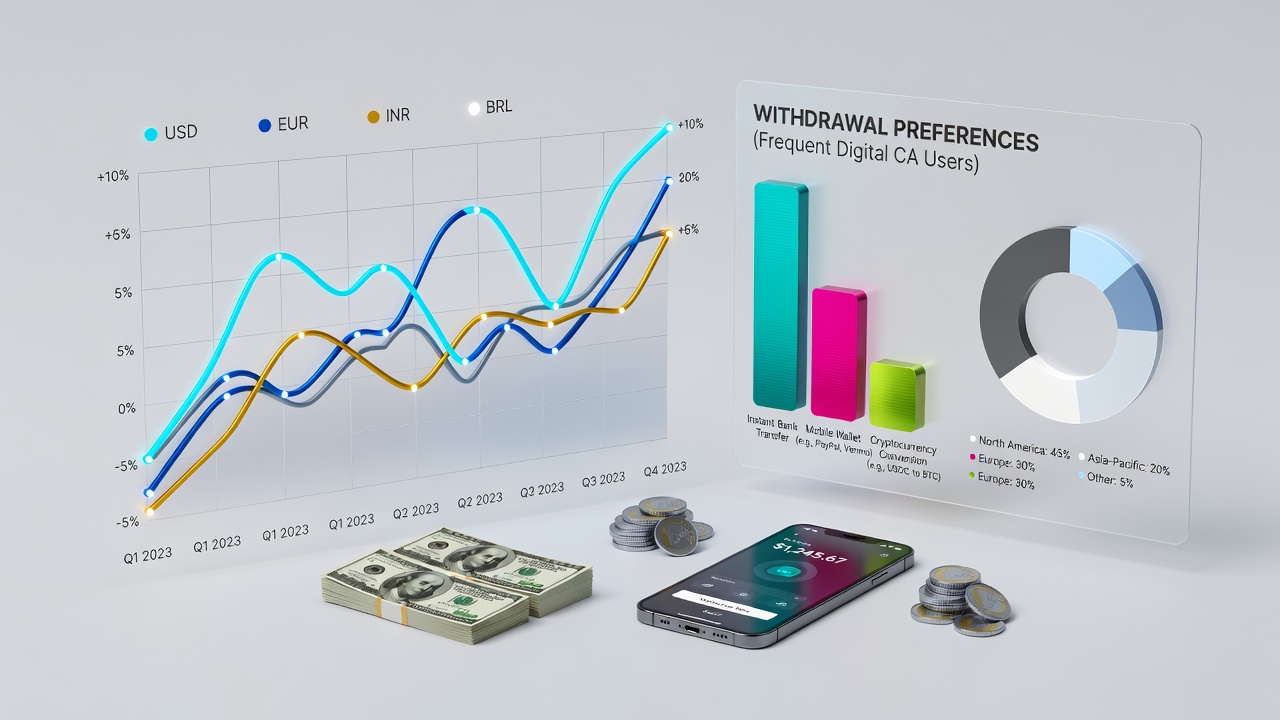
Transaction records also show that users in regions with capital controls or higher banking fees often maintain small platform balances in stronger foreign currencies, converting only when rates reach personal thresholds. This strategy surfaces most clearly among players who participate across several sites, since they can move funds internally before final withdrawal to optimize exposure. Industry reports compiled by research groups in Canada and Australia confirm that such multi-platform users complete withdrawals an average of 1.7 times per month during stable periods but increase frequency to 2.4 times when volatility indices exceed historical averages.
Timing Patterns and User Behavior Data
Activity logs from major platforms indicate that withdrawal requests cluster around specific hours that coincide with forex market openings in London and New York, and users appear to factor settlement times into their decisions. When a platform processes cryptocurrency withdrawals faster than bank transfers, that speed advantage becomes more pronounced during rapid currency movements, leading to higher selection rates for digital assets. Observers tracking these trends note that the pattern holds across both regulated and offshore platforms, although the magnitude of shifts varies according to the proportion of users from high-volatility currency zones.
Academic analyses of anonymized transaction datasets further reveal that users who experienced prior losses due to unfavorable exchange rates tend to adopt earlier withdrawal timing in subsequent sessions. This adjustment occurs without changes to overall deposit volumes, indicating a targeted response to currency risk rather than a broader change in playing habits. Platforms that introduced rate-alert notifications saw measurable uptake, with users who enabled such alerts executing withdrawals at rates closer to daily peaks than those without alerts.
Conclusion
The intersections between currency fluctuations and withdrawal preferences continue to shape operational decisions on digital casino platforms, and the patterns documented through June 2026 demonstrate consistent links between exchange rate movements and user method selection. Platforms that provide transparent rate information and diverse denomination options record higher user retention among frequent participants, while those without such features observe greater migration toward competitors offering real-time conversion tools. Continued monitoring of these dynamics provides operators with concrete data for refining payment infrastructure in line with observed user behavior across regions.